
Fair Bilevel Neural Network (FairBiNN): On Balancing Fairness and Accuracy via Stackelberg Equilibrium
Advances in Neural Information Processing Systems (NeurIPS 2024), 2024
TL;DR Fairness and accuracy are treated as two players in a Stackelberg game, each owning its own layers of one network. The bilevel solution is provably no worse than the usual Lagrangian (regularization) approach, and in practice it reaches a better accuracy–fairness trade-off.
Abstract
The persistent challenge of bias in machine learning models necessitates robust solutions to ensure parity and equal treatment across diverse groups, particularly in classification tasks. Current methods for mitigating bias often result in information loss and an inadequate balance between accuracy and fairness. To address this, we propose a novel methodology grounded in bilevel optimization principles. Our deep learning-based approach concurrently optimizes for both accuracy and fairness objectives, achieving Pareto optimal solutions while mitigating bias in the trained model. Theoretical analysis shows that the upper bound on the loss incurred by this method is less than or equal to the loss of the Lagrangian approach. We demonstrate the efficacy of our model on tabular datasets such as UCI Adult and Heritage Health, outperforming state-of-the-art fairness methods.
Method
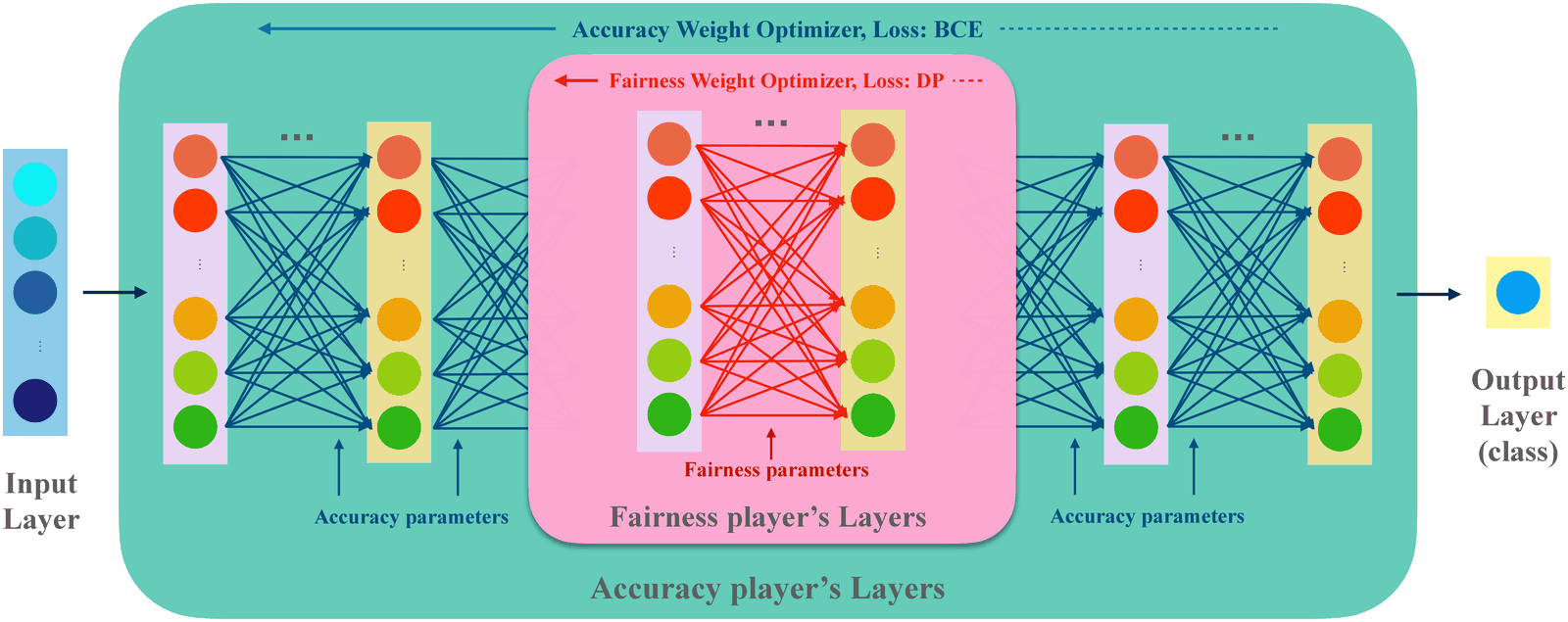
The accuracy player is the leader: it solves the upper-level problem, taking into account how the fairness player will respond. The fairness player is the follower: it minimizes the fairness loss given the leader’s parameters. Training alternates between the two updates. Under the paper’s assumptions, the resulting Stackelberg equilibrium is Pareto optimal, and its loss is bounded by that of the Lagrangian formulation.
Results
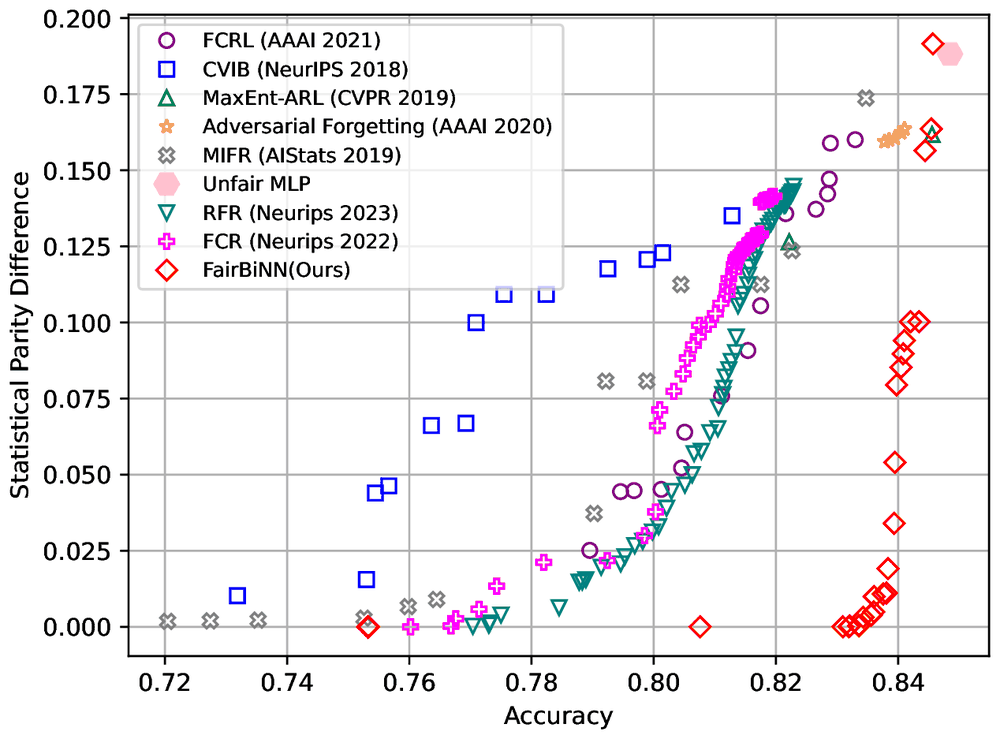
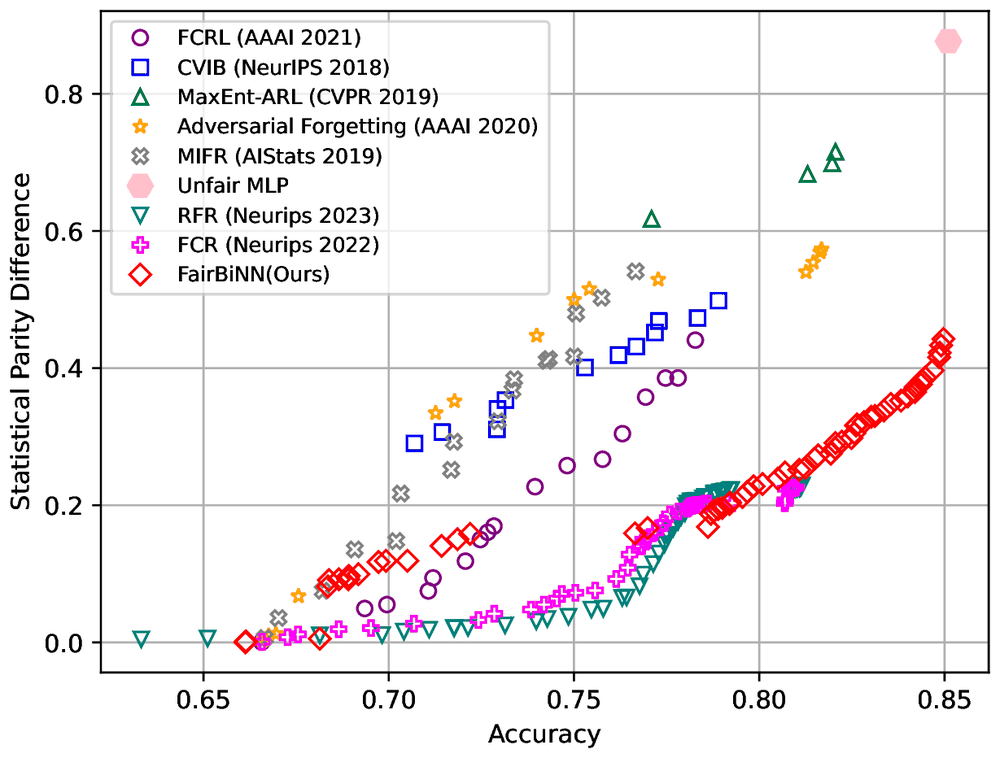
Accuracy compared with statistical demographic parity for FairBiNN (red diamonds) and benchmark methods. The best region is the bottom right: high accuracy and low parity difference. FairBiNN gives the best trade-off on both datasets.
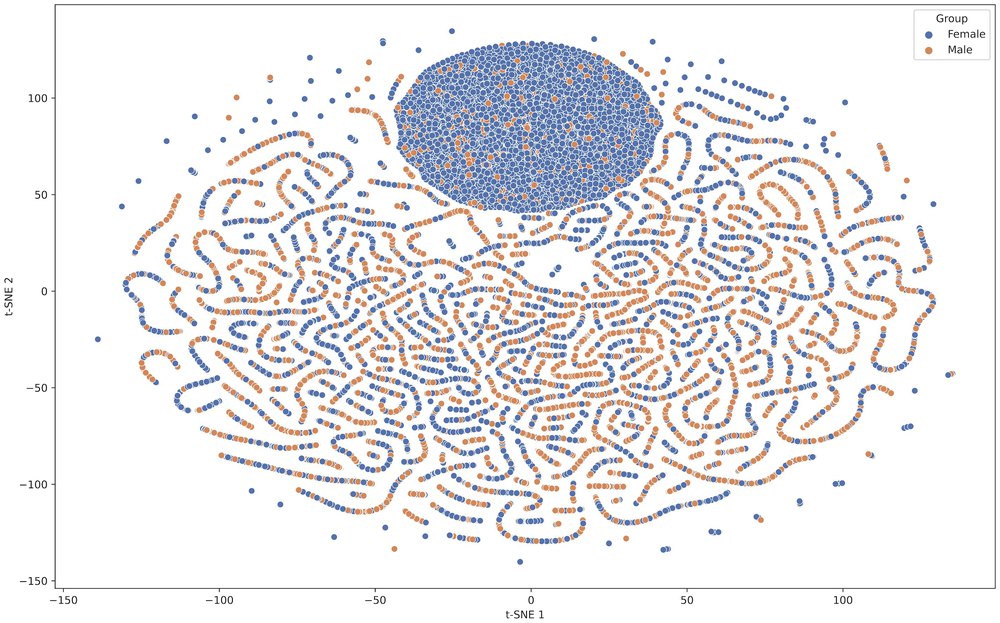
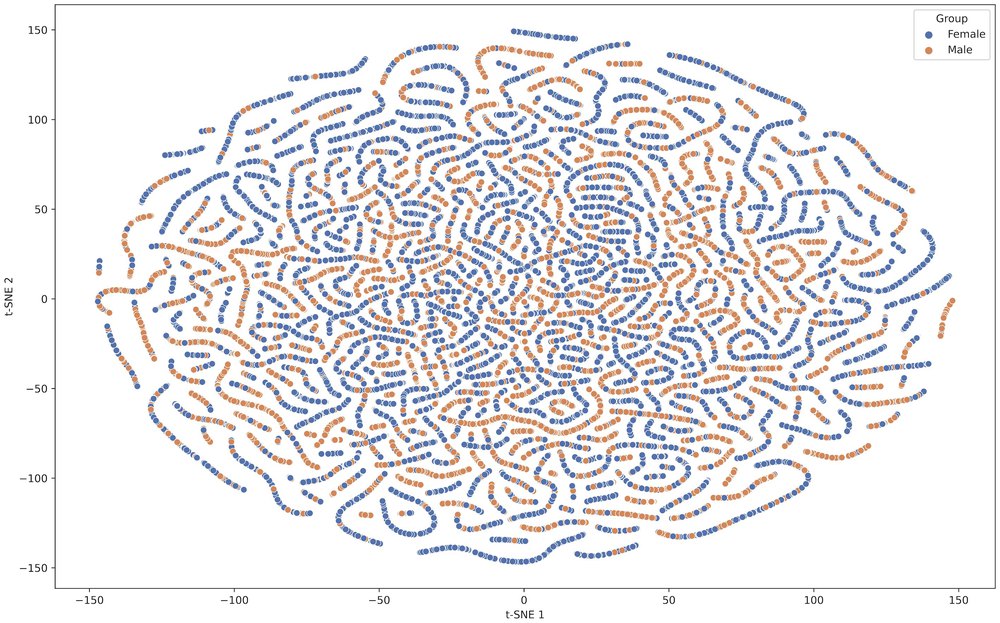
CelebA (target: Attractive): t-SNE of the representation, colored by gender. With the fairness layers, the representation no longer clusters by gender.
Citation
@inproceedings{yazdanijahromi2024fairbinn,
  title     = {Fair Bilevel Neural Network (FairBiNN): On Balancing Fairness and Accuracy via Stackelberg Equilibrium},
  author    = {Yazdani-Jahromi, Mehdi and Khodabandeh Yalabadi, Ali and Rajabi, Amirarsalan and Tayebi, Aida and Garibay, Ivan and Ozmen Garibay, Ozlem},
  booktitle = {Advances in Neural Information Processing Systems},
  volume    = {37},
  pages     = {105780--105818},
  year      = {2024}
}