
Through a Fair Looking-Glass: Mitigating Bias in Image Datasets
International Conference on Human-Computer Interaction (HCII 2023), Artificial Intelligence in HCI, 2023
TL;DR A U-Net learns small edits to each image that reduce the statistical dependence (HSIC) between the target attribute (Attractive) and gender. This de-biases the dataset itself, so classifiers trained on it are fairer.
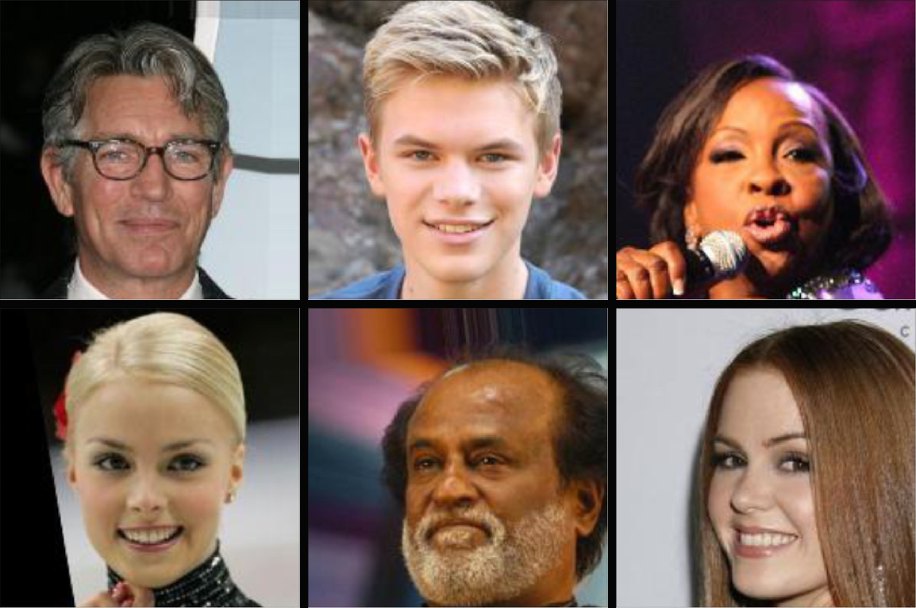
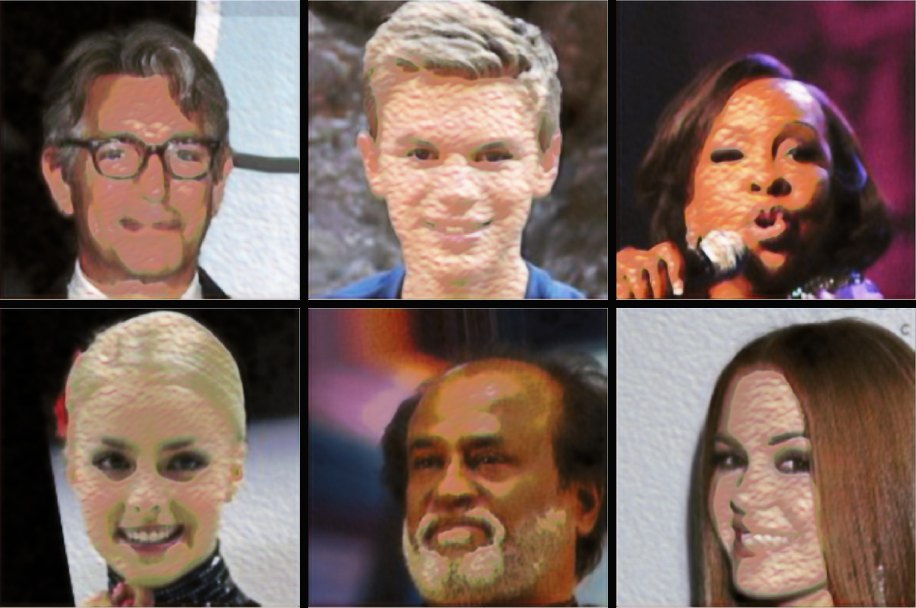 Original Reconstructed
Abstract
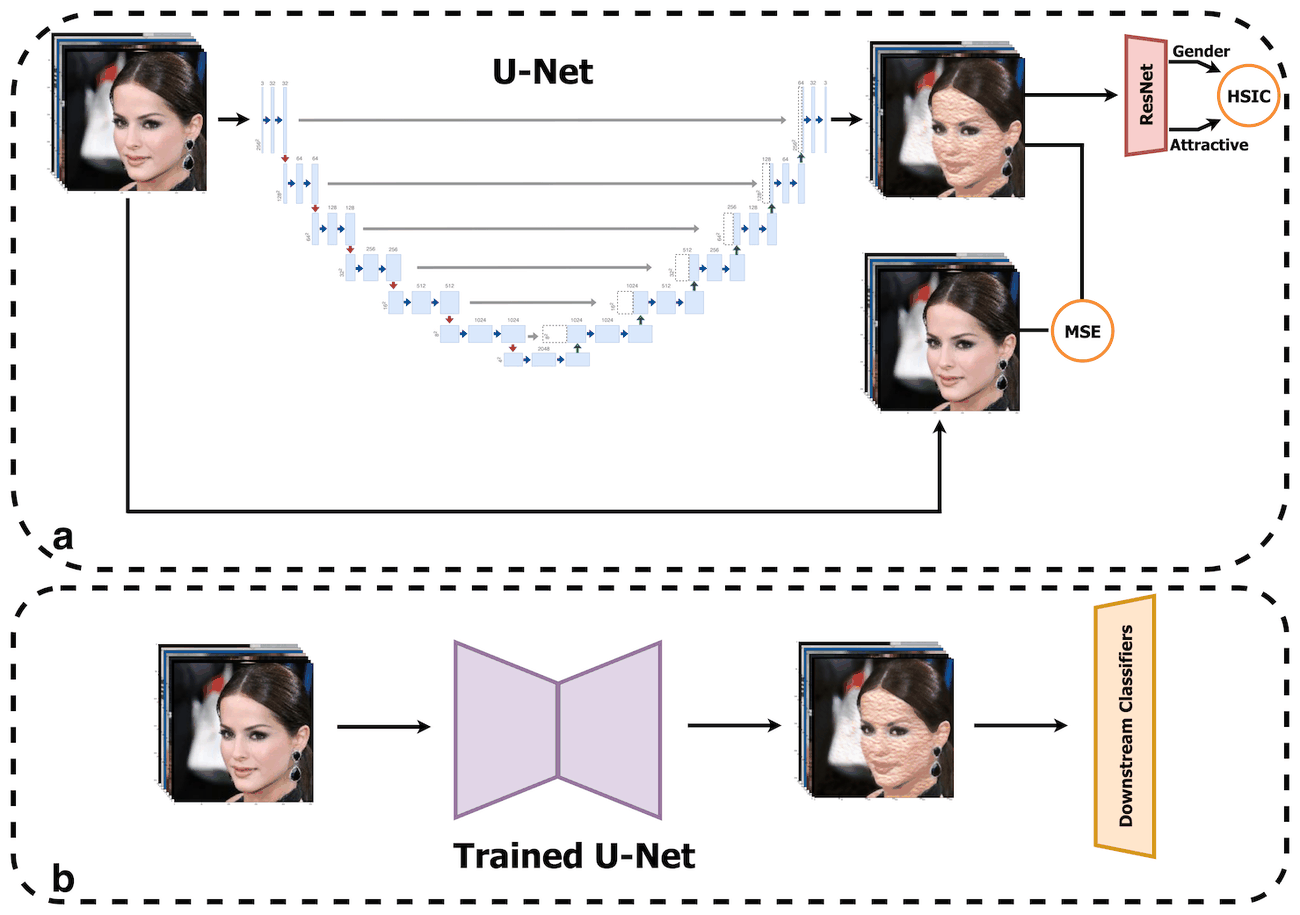
With the recent growth in computer vision applications, the question of how fair and unbiased they are has yet to be explored. There is abundant evidence that the bias present in training data is reflected in the models, or even amplified. Many previous methods for image dataset de-biasing, including models based on augmenting datasets, are computationally expensive to implement. In this study, we present a fast and effective model to de-bias an image dataset through reconstruction and minimizing the statistical dependence between intended variables. Our architecture includes a U-net to reconstruct images, combined with a pre-trained classifier which penalizes the statistical dependence between target attribute and the protected attribute. We evaluate our proposed model on CelebA dataset, compare the results with a state-of-the-art de-biasing method, and show that the model achieves a promising fairness-accuracy combination.
Method
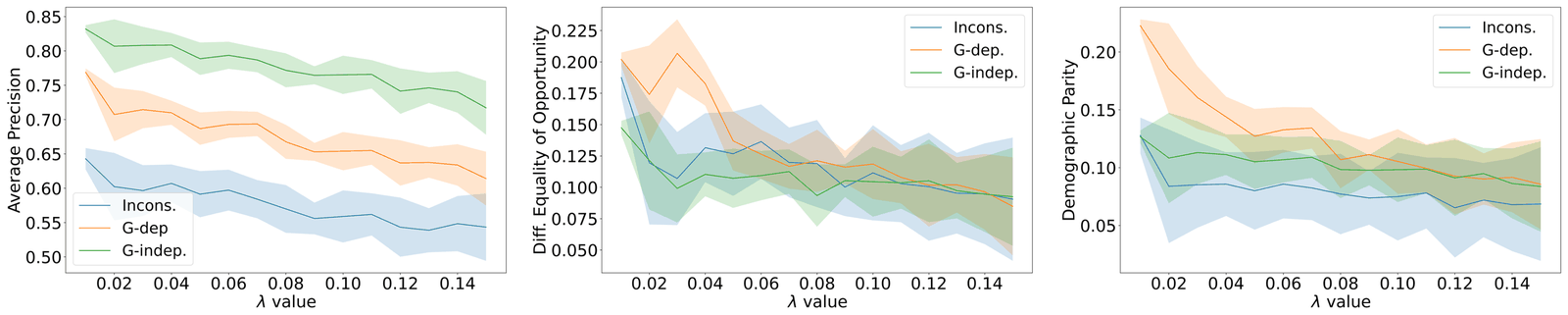
Results
Results on CelebA, using the attribute categories of Ramaswamy et al. (2021). Each value is the average over all attributes in that category.
| AP ↑ | DP ↓ | DEO ↓ | |||||||
|---|---|---|---|---|---|---|---|---|---|
| Incons. | G-dep | G-indep | Incons. | G-dep | G-indep | Incons. | G-dep | G-indep | |
| Baseline | 0.667 | 0.790 | 0.843 | 0.147 | 0.255 | 0.137 | 0.186 | 0.243 | 0.163 |
| GAN debiasing | 0.641 | 0.763 | 0.831 | 0.106 | 0.233 | 0.119 | 0.158 | 0.240 | 0.142 |
| Adversarial debiasing | 0.243 | 0.333 | 0.218 | 0.091 | 0.169 | 0.121 | 0.136 | 0.149 | 0.098 |
| Ours | 0.618 | 0.732 | 0.839 | 0.097 | 0.146 | 0.118 | 0.124 | 0.172 | 0.114 |
Citation
@inproceedings{rajabi2023looking,
  title     = {Through a Fair Looking-Glass: Mitigating Bias in Image Datasets},
  author    = {Rajabi, Amirarsalan and Yazdani-Jahromi, Mehdi and Ozmen Garibay, Ozlem and Sukthankar, Gita},
  booktitle = {Artificial Intelligence in HCI (HCII 2023)},
  series    = {Lecture Notes in Computer Science},
  pages     = {446--459},
  publisher = {Springer},
  year      = {2023},
  doi       = {10.1007/978-3-031-35891-3_27}
}